OXIDATION REMOVAL PRICING
Oxidation Removal
Oxidation Removal
Starting at $20.00 LF
3m compound is used to gently buff off the Oxidation once the oxidation is remove we apply a UV type wax for long lasting durability and some cases a UV coating is applied to your vinyl or rubber roof where applicable
Depending on The severity of the oxidation
Price varies please call for a free quote
Reversing Years of Sun Damage
Oxidation Removal in Greater Tampa Bay for RVs with Faded Gelcoat and Chalky Surfaces
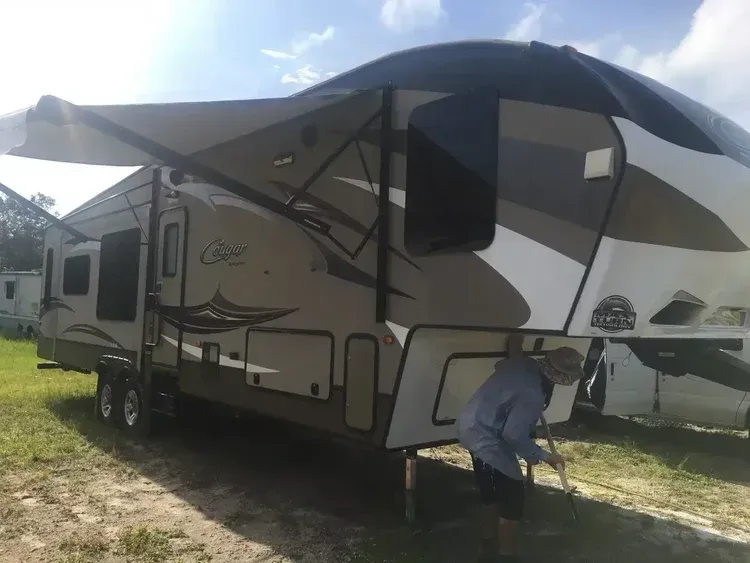
Oxidized fiberglass and gelcoat appear faded, chalky, and dull because UV exposure breaks down resin at the surface layer, leaving behind degraded material that no amount of washing can restore to original gloss. Heavy compounding removes this damaged layer through aggressive abrasives, optional wet sanding addresses severe cases where oxidation has penetrated deeply, and multi-stage machine polishing progressively refines the surface to eliminate haze and restore reflective clarity. Mpres mobile Rv detailing performs oxidation correction on-site across Greater Tampa Bay using professional rotary and dual-action polishers that reveal fresh gelcoat underneath years of neglected weathering.
The process starts with heavy-cut compounds applied under controlled pressure to remove oxidized resin without generating heat that could warp panels or burn through thin gelcoat layers. Each polishing stage uses finer abrasives to refine scratches left by the previous step, gradually transitioning from cutting to finishing until the surface shows mirror-like reflections. Dramatic before-and-after transformations are common on RVs that have sat uncovered for years, where sidewalls transition from chalky white or faded colors back to vibrant original finishes.
Request a restoration evaluation if your RV's finish leaves chalky residue on your hand when wiped or appears noticeably lighter than protected areas under slide-outs.
Why Standard Washing Cannot Fix Oxidation
Oxidation occurs when UV radiation chemically degrades gelcoat resin, leaving behind a damaged surface layer that feels rough and looks hazy regardless of how thoroughly it is washed. Compounding physically removes this degraded material using abrasive particles suspended in lubricating oils, cutting through oxidation to expose fresh resin that still contains color pigments and glossy properties.
Once oxidation removal is complete, you notice that the RV's color appears several shades darker and more saturated, chalky residue no longer transfers to rags during cleaning, and the surface reflects surrounding objects clearly instead of diffusing light into dull haze. Gloss restoration makes decals and graphics appear more vibrant by eliminating the faded background that previously dulled their contrast, and the finish feels smooth rather than rough or textured to the touch.
Restored surfaces remain vulnerable to future oxidation unless protected with Ceramic Coatings or regular waxing, because polishing removes damaged material but does not prevent UV exposure from starting the degradation process again. Most customers choose ceramic protection immediately after oxidation removal to preserve the restored finish for years rather than allowing it to fade again within months.
Questions About Restoring Neglected Finishes
Owners of weathered RVs often ask about restoration limits, how long results last, and whether severely faded finishes can be saved without repainting.
How much oxidation can be removed before gelcoat becomes too thin?
Gelcoat thickness varies by manufacturer, but most surfaces tolerate one to three full correction cycles before material removal approaches unsafe limits where UV protection and structural integrity diminish noticeably.
Will oxidation removal fix surfaces that have turned completely white?
Severe oxidation that has penetrated through all colored resin layers may not restore fully because no pigmented material remains underneath, though compounding often reveals more original color than expected until the surface is actually corrected.
How long does restored gelcoat stay glossy after oxidation removal?
Without protection, gelcoat begins oxidizing again immediately and shows visible fading within six to twelve months in Greater Tampa Bay's intense sun, which is why ceramic coating or regular waxing is recommended within days of correction.
Can oxidation removal be performed on RVs with vinyl graphics?
Compounding around decals requires careful technique to avoid lifting edges or abrading vinyl surfaces, and heavily oxidized finishes often show sharp color transitions at graphic edges where covered areas remained protected.
What's the difference between oxidation removal and a standard Wash & Wax?
Washing cleans surface dirt but cannot remove oxidized resin, while compounding and polishing physically cut into the gelcoat to eliminate degraded material and restore gloss that washing alone will never achieve.
Mpres mobile Rv detailing assesses oxidation severity during on-site evaluations and explains realistic outcomes based on how deeply UV damage has penetrated your RV's finish. Contact the shop to schedule a restoration consultation and review whether your gelcoat can be saved or requires repainting.
CONTACT US
Contact Us
We will get back to you as soon as possible.
Please try again later.