Seamless Protection for Roofs Beyond Maintenance
Elastomeric Roof Coating in Greater Tampa Bay for RVs with widespread weathering and aging roofing systems requiring complete encapsulation
Roofs that have moved past the point where standard maintenance coatings provide adequate protection require a different approach. Elastomeric roof coating is a liquid-applied membrane system that creates a seamless rubberized layer over compatible RV roofing materials, and Mpres mobile Rv detailing applies these systems in Greater Tampa Bay when inspections reveal extensive UV damage, multiple seam failures, or surface deterioration across large sections of the roof. This coating stretches and contracts with the normal movement RVs experience during travel and temperature changes without developing cracks.
The system works by forming a continuous waterproof barrier that encapsulates seams, penetrations, and the entire roof surface in a flexible membrane. Unlike maintenance coatings that refresh existing protection, elastomeric coatings rebuild the protective layer when the original system has failed. The material's elasticity prevents the cracking that occurs with rigid coatings when the roof flexes.
Schedule a roof restoration consultation to assess whether your RV's condition requires elastomeric treatment.
How Elastomeric Systems Differ from Standard Coatings
Application begins with aggressive surface preparation that removes all loose material, contaminants, and failed coating remnants down to a sound substrate. Any soft spots or compromised decking are addressed before coating begins, since the membrane only performs properly when bonded to stable material. The elastomeric coating is then applied in multiple passes to achieve the thickness required for seamless coverage and long-term flexibility.
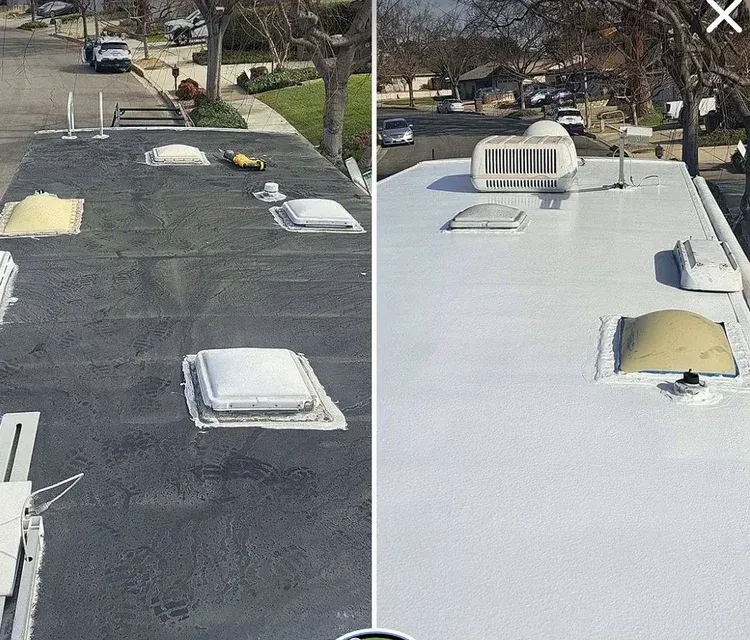
Once cured, the roof surface appears uniformly white or light-colored with a slightly textured finish that reflects sunlight rather than absorbing it. You'll notice that seams are no longer visible as individual lines because the membrane bridges across them, and the surface sheds water immediately rather than allowing it to sit in low areas. Interior temperatures often decrease because the reflective coating reduces heat transfer through the roof assembly.
This system is not appropriate for every roof—it requires compatible substrate material and sufficient remaining structural integrity to support the membrane. Roofs with active leaks need those sources identified and repaired before coating, and roofs with certain types of prior coatings may require additional preparation or may not be candidates for elastomeric application at all.
What Owners Ask About Elastomeric Coating
The following questions come up frequently when discussing complete roof restoration systems.
What makes elastomeric coating different from maintenance products I can buy myself?
Elastomeric systems are applied as liquid membranes in controlled thicknesses that cure into a rubberized layer, whereas maintenance coatings are thinner protective films that refresh existing systems rather than replacing them.
How does the coating handle expansion and contraction?
The cured membrane stretches up to several hundred percent of its original dimension without tearing, which allows it to accommodate the flexing that occurs during temperature swings and road vibration.
Why does reflective coating reduce interior heat in Greater Tampa Bay?
Light-colored elastomeric membranes reflect a significant portion of solar radiation rather than absorbing it, which lowers the roof surface temperature and reduces the heat load transferred into the RV's interior space.
What roof conditions make elastomeric coating necessary?
Widespread chalking, multiple seam separations, large areas of exposed substrate, or roofs that have been patched repeatedly without resolving the underlying deterioration pattern typically require complete membrane encapsulation.
How do I know if my roof material is compatible with elastomeric systems?
EPDM and TPO roofs are generally compatible once properly cleaned and prepared, but roofs with silicone-based prior coatings or certain incompatible sealants may require additional surface treatment or may not accept elastomeric products without specialized primers.
Mpres mobile Rv detailing inspects your roof to determine whether elastomeric restoration is the appropriate solution based on material type, damage extent, and structural condition. Request a roof restoration consultation to review your specific situation and receive a detailed assessment of what your roof requires.
CONTACT US
Contact Us
We will get back to you as soon as possible.
Please try again later.